

The Oracle and the Algorithm
Why AI and astrology are more alike than we admit

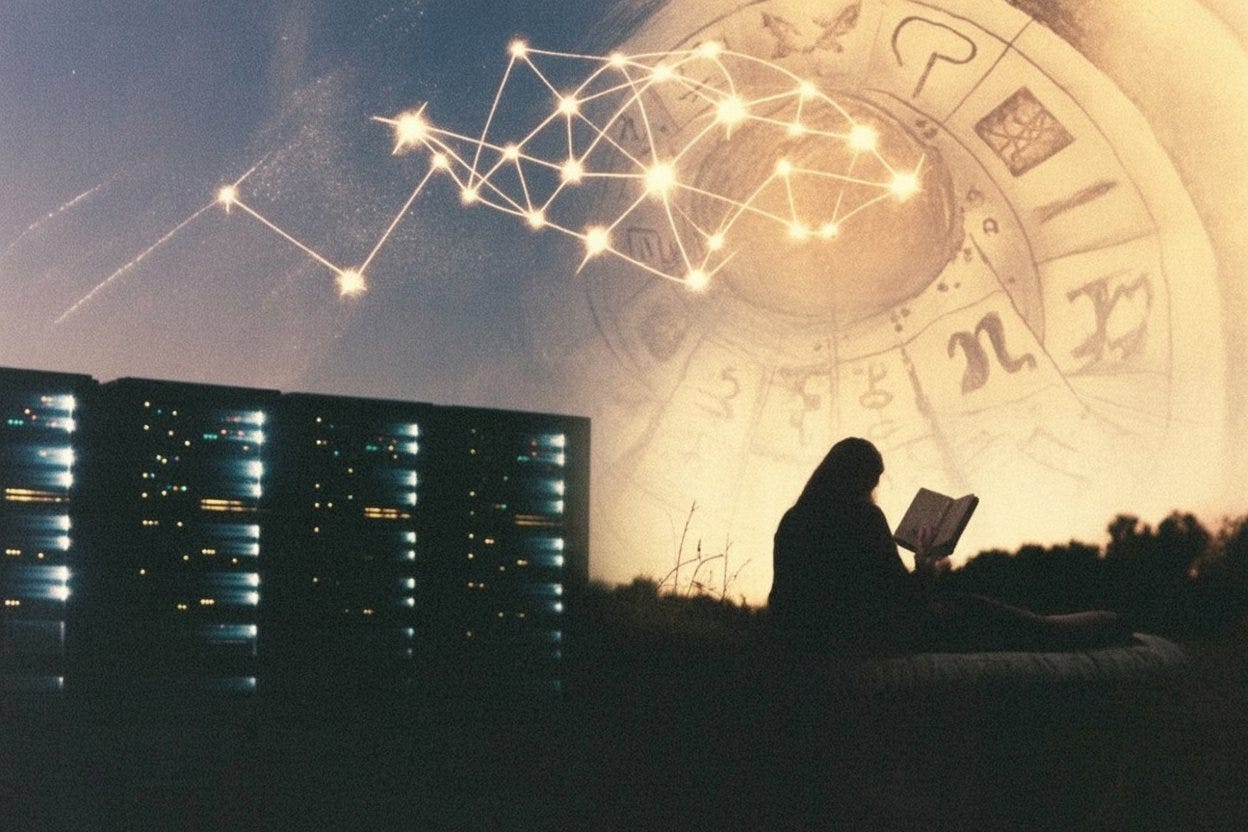
We like to believe we’ve outgrown superstition. That our algorithms, powered by data and computation, are far removed from the ancient oracles our ancestors once consulted. But the more I observe how we interact with AI, the more I see the same pattern repeating: a human impulse dressed in modern code.
AI and astrology are both probability engines dressed up as prophecy. One draped in math, the other in myth. The algorithm sifts through data points, hunting for patterns that predict what comes next. The chart, the cards, the runes do something eerily similar, drawing from symbolic data accumulated over centuries of human experience.
We call one “science” and the other “superstition.” But the distinction isn’t as clean as we think. Both offer mirrors of probability, not certainty. And both demand interpretation: the act of weaving meaning from pattern.
The irony? We worship algorithms as objective while dismissing oracles as naive. Yet both mislead when taken too literally. The map is never the territory. The model is never the mystery. When we outsource our judgment entirely, whether to machine or myth, we lose the very faculty that makes either useful: discernment.
At the end of the day, it’s really about meaning-making. Whether it’s myth, divination, or modern tech like AI models, the real oracle isn’t the tool at all. It’s us: the humans interpreting, choosing, weighting, giving meaning. Prediction without wisdom is just delusion. And maybe what we call “objectivity” today is simply our latest mythology. What if our certainty about objectivity is the real superstition?
This is such a good point!