



Welcome to the 18th Nakshatra, Jyestha. If you haven’t read the first two posts in this series yet, I recommend you start there before continuing to this Nakshatra.


The Basics

Jyestha Nakshatra spans from 16°40’ to 30°00’ in Scorpio — the final stretch of this sign’s intense, transformative terrain. If Anuradha is about devotion and connection, Jyestha is about mastery and protection.
Ruled by Mercury and residing entirely in Scorpio, Jyestha embodies intelligence sharpened by experience.
The Myth
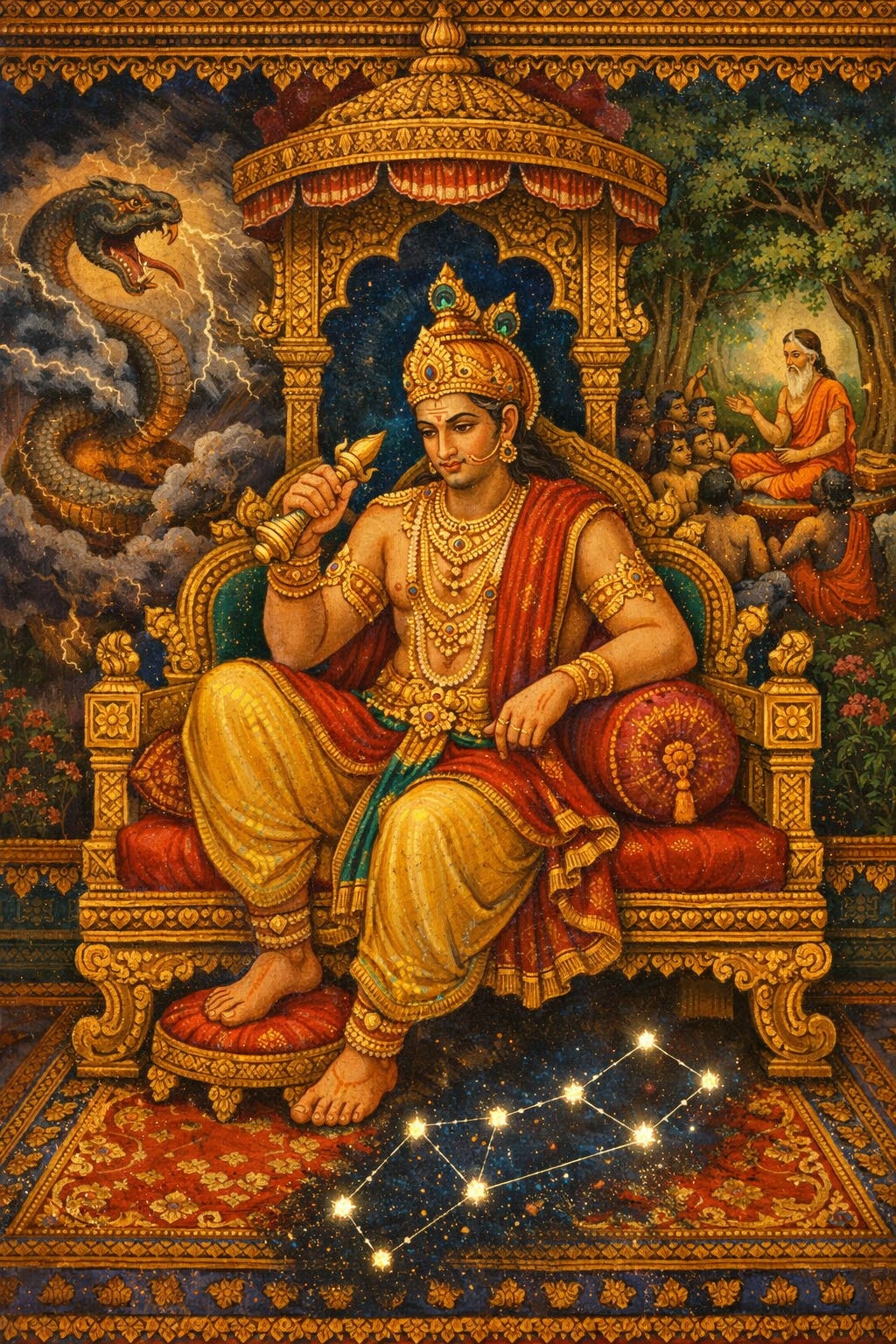
The presiding deity of Jyestha is Indra, the King of the Gods — wielder of the thunderbolt, slayer of Vritra, the serpent of chaos. Indra’s myth is complex. He is the protector of heaven, the bringer of rain, the guardian of divine order, yet he is also known for his pride, jealousy, and moments of downfall.
One prominent story involves Indra, who, due to pride, disrespected his guru Brihaspati. To teach Indra a lesson, Brihaspati began instructing the demons instead, who gained the knowledge to defeat the gods. Indra was eventually freed and restored to power only with Jyestha Nakshatra’s wisdom and intervention, teaching themes of humility and the responsible use of authority.
Through Indra, Jyestha learns the balance between power and humility. His story is not one of flawless victory but of the human struggle with authority and ego. He must constantly prove his worth, defend his throne, and learn, again and again, that true leadership is not domination, but service.
In Jyestha’s current, this becomes the lesson of spiritual maturity: to lead with wisdom, to protect without control, and to hold power as stewardship rather than possession.
Symbolism
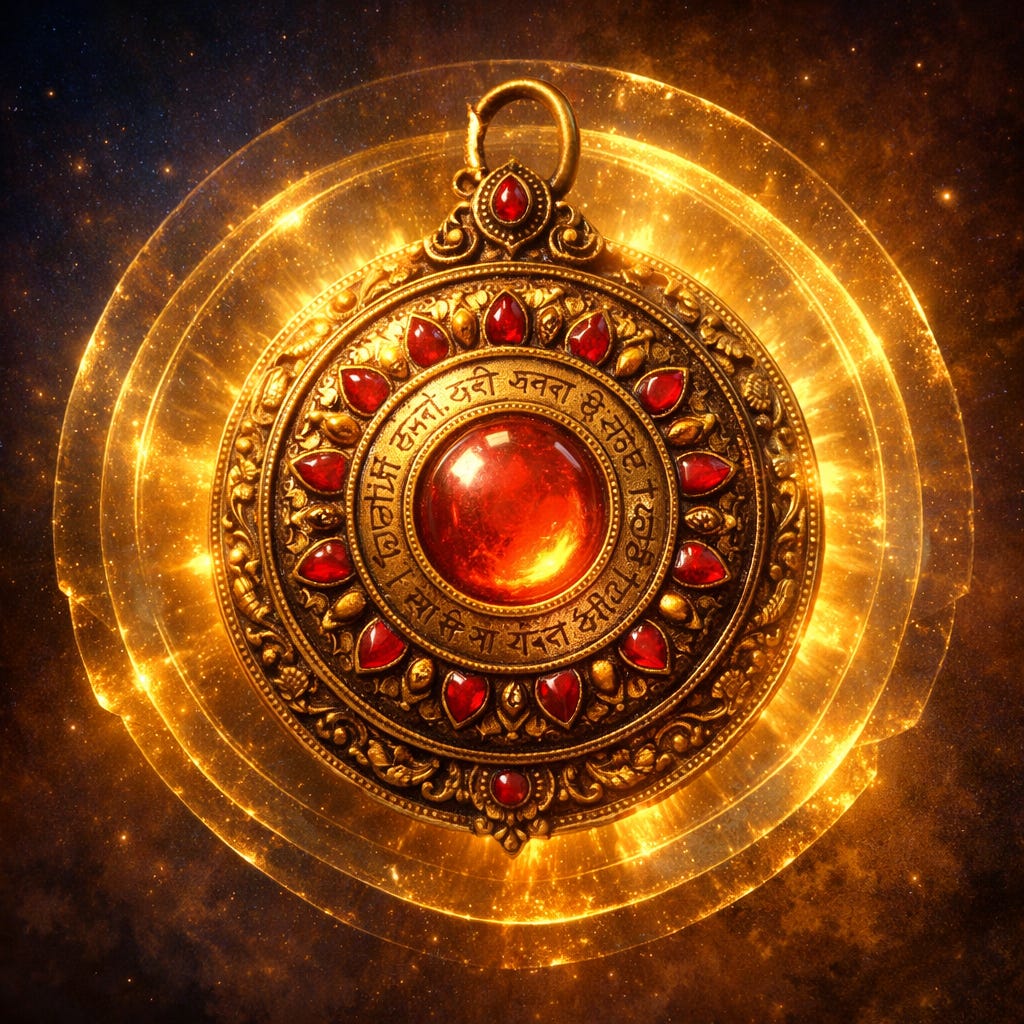
Jyestha’s symbol is the protective amulet or circular earring. This is seen as a mark of honor, insight, and guardianship. It represents earned authority, the kind that comes not from inheritance but from experience. This amulet is both armor and reminder: power must be held with integrity. It speaks of one who can hold boundaries, withstand trials, and protect what is sacred.
Rulerships

Zodiac Rulership —Entirely in Scorpio: Mars lends courage, secrecy, and emotional magnetism.
Nakshatra Rulership —Ruled by Mercury: Brings mental sharpness, adaptability, and insight. But also a potential for over-analysis or cunning when misused.
Deity Rulership —Indra’s energy governs leadership, valor, and responsibility — the power to protect and the burden that comes with it.
Symbolism — Honor, Insight, and guardianship
Putting It All Together
Ruled by Mercury: Jyestha carries a keen intellect. It observes, analyzes, and perceives motives beneath the surface. This makes it a natural leader, strategist, or protector. Yet Mercury’s flexibility in Scorpio’s emotional depths can also create inner tension between wanting control and seeking truth.
Indra’s Influence: Leadership here is karmic. Jyestha natives are often thrust into roles of responsibility. Sometimes before they feel ready. Like Indra, they must learn to wield authority without arrogance, to channel strength into protection rather than dominance.
Symbolized by the Amulet: Protection is a core theme. Not just physical, but energetic and emotional. Jyestha knows how to shield itself and those it loves from chaos, often serving as a guardian or counselor during crises.
In Scorpio: This nakshatra lives through intensity. It understands the hidden layers of power, emotion, and transformation, but it also carries the task of purification through self-awareness.
If Your Moon is in Jyestha
If your Moon is in Jyestha, you are intuitive, protective, and perceptive. You may feel a natural sense of responsibility, as if you must hold others together, even when you crave solitude.
There’s a grounded strength and natural authority in you. You sense what’s unspoken, and your perception cuts through pretense. Trust becomes sacred because you can see beyond words. When balanced, you embody the wise elder, someone others turn to for guidance and emotional steadiness.
But the shadow side is over-responsibility. This could look like carrying burdens that aren’t yours, or feeling isolated by your own strength. Learning to share power and accept help becomes part of your emotional evolution.
Mercury’s rulership brings eloquence and sharp mental clarity; Mars’s influence infuses passion and resilience. You are both thinker and warrior, a rare combination of mind and depth.
A Quick Example
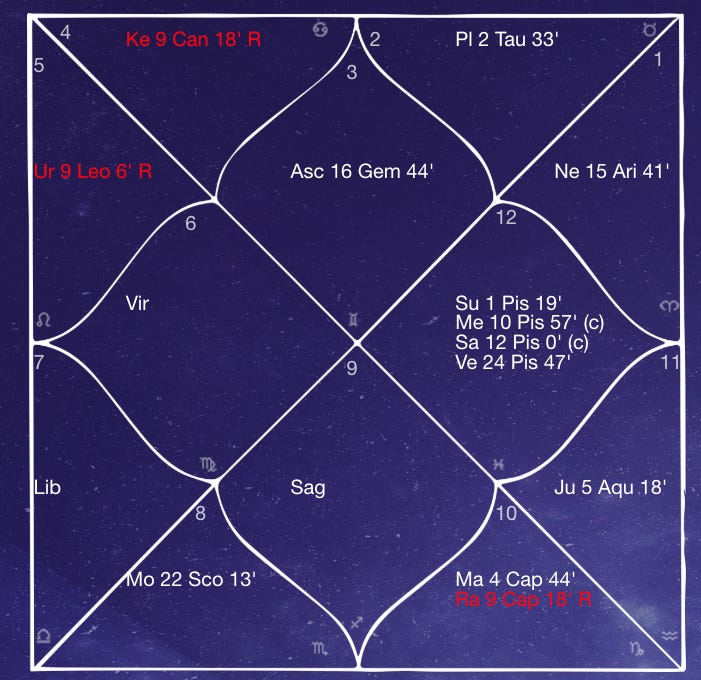
This chart shows Moon in Jyestha, placed in Scorpio in the 6th house. Mars, the ruler of the 6th house, sits in the 8th.
Moon in the 6th house suggests a service or health-oriented posture. They are bold, seen as a leader and voice in their arena. The 6th house channels Jyestha’s intensity into practical work, often healing, crisis management, or conflict resolution.
The Moon-Mars-8th house connection indicates sudden changes in status. This person’s life likely moves through cycles of sudden fame, and sudden fall. The Jyestha pattern plays out through rupture and transformation, death and rebirth in the public eye.
Mercury in the 10th house, along with Sun, Saturn, and Venus, points to a public figure. Their success connects to revealing things that are complex, hidden, or out of the box. The Capricorn stellium brings visibility while Saturn adds weight and structure to their communication.
Gemini Ascendant with Mercury in the 10th means this person’s life and personality revolve around their work and ideas. Mercury rules both the 1st house (self) and 4th house (home, emotional foundation) while placed in the 10th. Their identity, their inner world, their public mission are then all entangled.
Conclusion
Jyestha is where Scorpio’s fire turns to refined light - where passion becomes wisdom, and leadership becomes protection. Ruled by Mercury, it brings intellect to Scorpio’s emotional depth, creating sharp perception and intuitive mastery.
Things to embrace: Self-mastery, mentorship, discernment, and the courage to lead by example.
Things to be cautious of: Ego traps, over-control, or emotional isolation.
Jyestha’s gift is the understanding that true strength is not in dominance but in stewardship.It teaches that the highest power is not to conquer, but to protect, guide, and illuminate.
References:
The Nakshatras: The Stars Beyond the Zodiac by Komilla Sutton
The Nakshatras by Dennis Harness
The Essentials of Vedic Astrology by Komilla Sutton
Nakshatra — The Authentic Heart of Vedic Astrology by Vic DiCara
27 Stars, 27 Gods: The Astrological Mythology of Ancient India by Vic DiCara
Vedic Astrology Simply Put by William R. Levacy